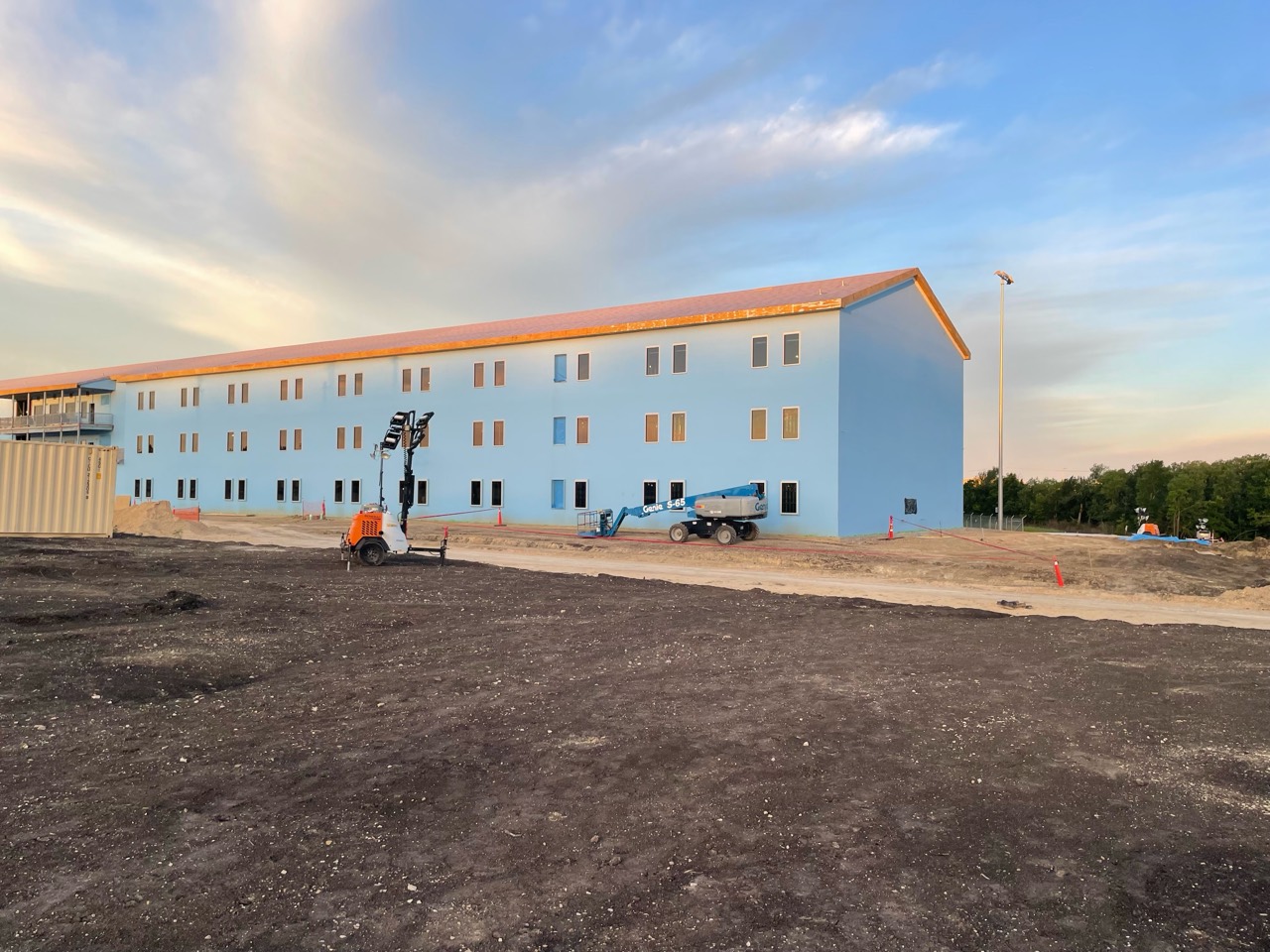
Built in Austin
Austin building-envelope leak detection
A ceiling stain or wet baseboard tells you where the water ended up. It rarely tells you where it got in. We inspect the outside, trace the wet path through the building, and show you what needs to be opened and repaired.
Homes, apartments, retail, offices, warehouses, and steel buildings across Greater Austin.
Water can enter above a window, at a roof edge, through a metal panel fastener, or around a wall penetration. Gravity and framing carry it somewhere else before it becomes visible.
In wood-framed homes, wet sheathing and bottom plates can stay hidden behind drywall. In steel buildings, water can follow girts, purlins, fasteners, and insulation across a large section of the wall or roof.
Austin heat breaks down sealants, and hard wind-driven rain finds openings that stay dry during a light shower. A quick coating over the stain does not fix the entry point.
Built in Austin
What to watch for
Field standard
Where leaks begin
Windows, decks, parapets, wall penetrations, and material changes are common entry points. These are actual waterproofing details from our work.
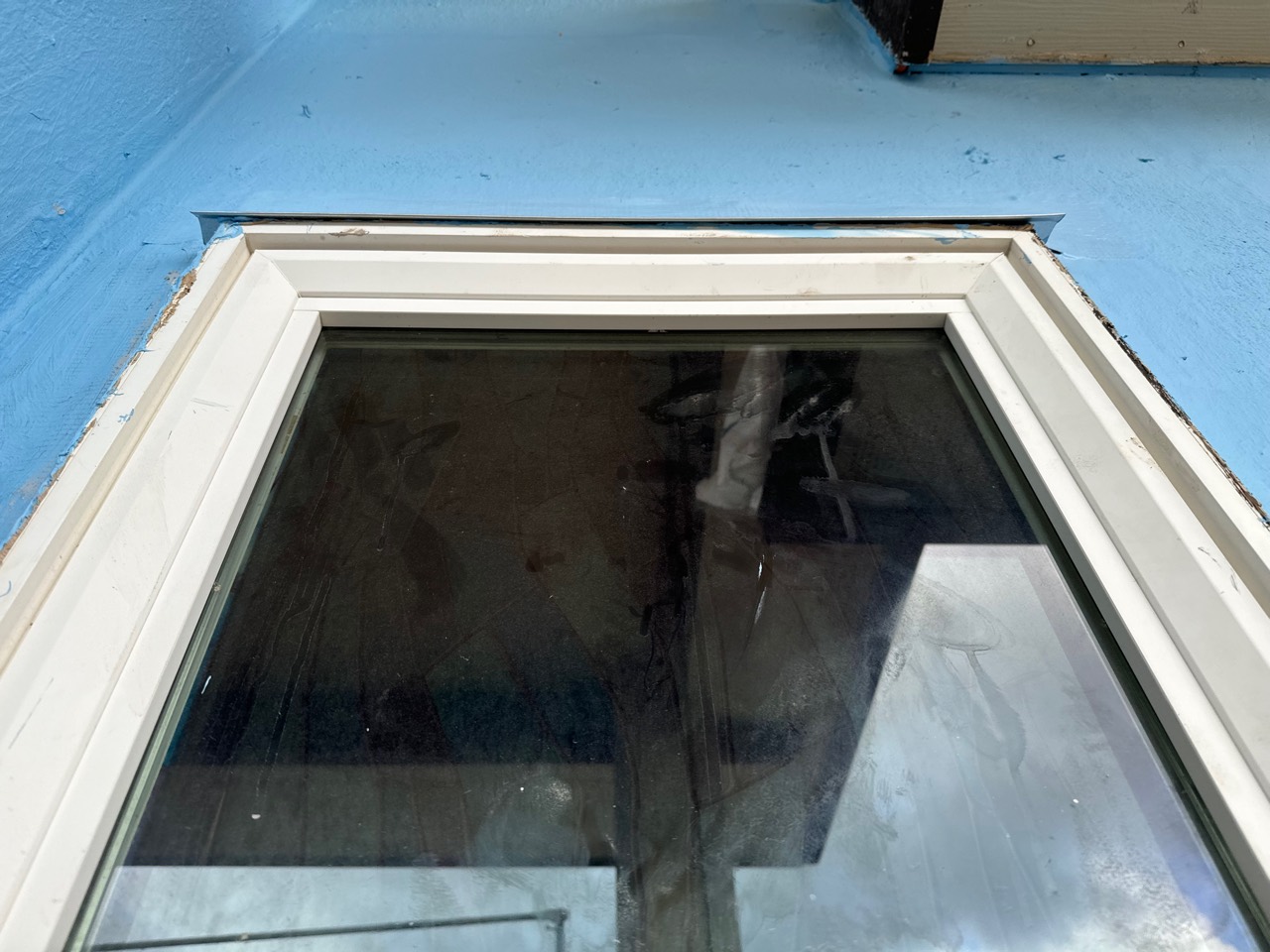
Head flashing and perimeter seals have to move water out and away from the wall assembly.
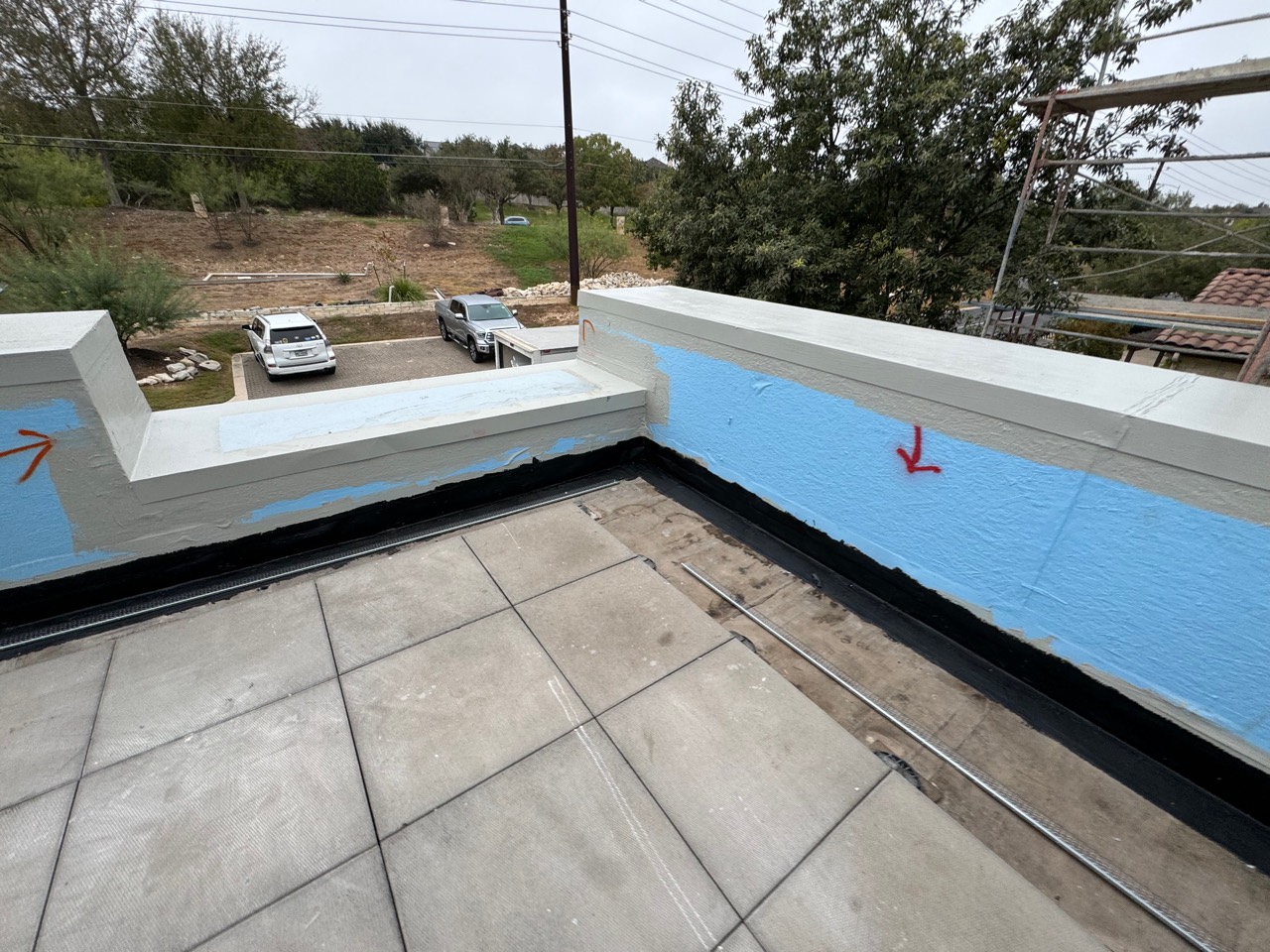
Wall-to-deck joints and parapets need a continuous membrane with no open path behind the finish.
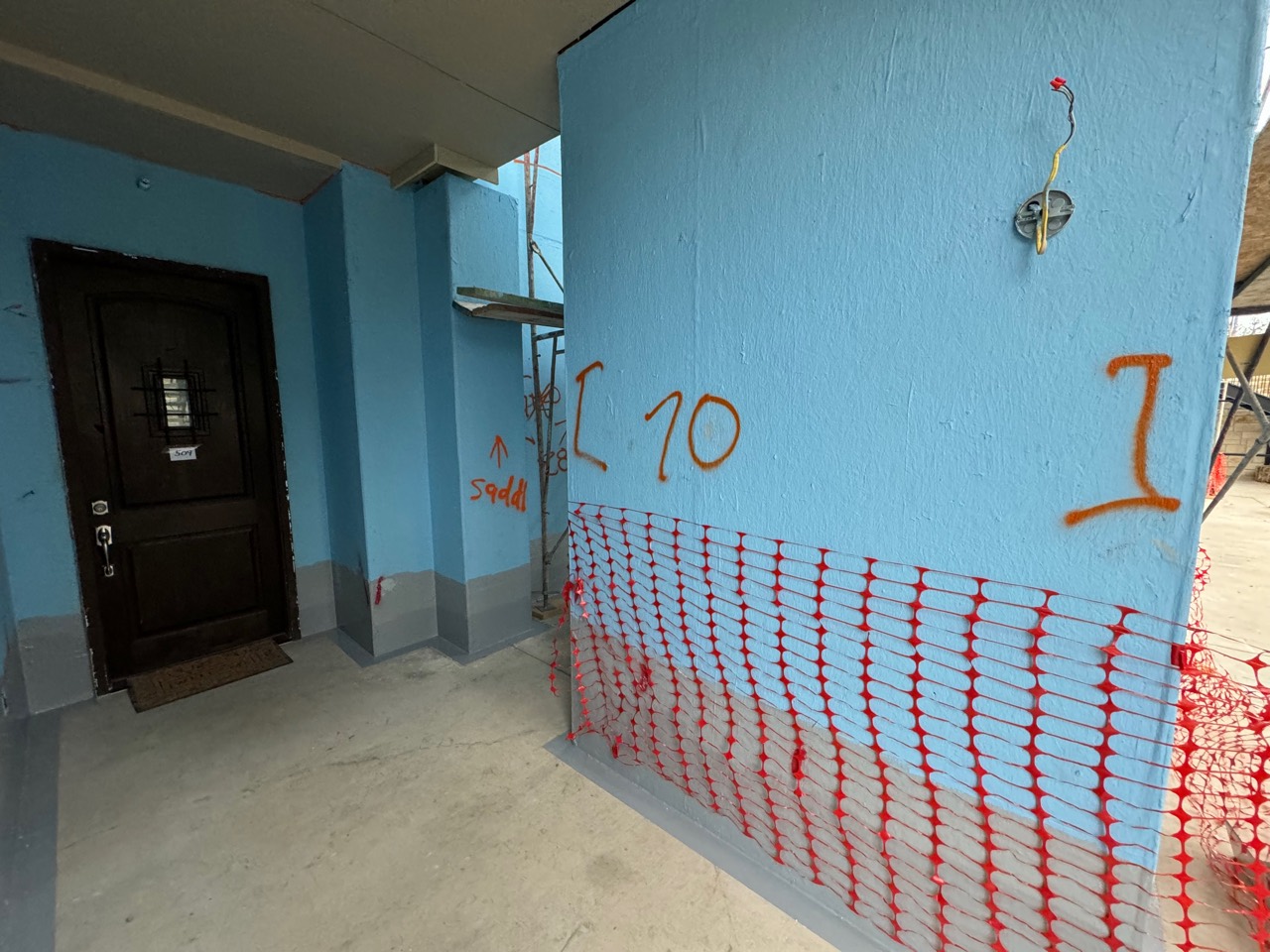
The waterproofing layer is tied into openings, corners, and adjacent materials before the finish goes back on.
The field plan
Clear scope, honest boundaries, and a repair built around the assembly—not the stain.
We start with the building type and the weather conditions that trigger the leak. Then we inspect likely entry points, take moisture readings, and use controlled water testing when the assembly allows it.
If a small inspection opening is needed, we explain where and why before cutting. The goal is to expose enough of the wet path to make a repair plan without tearing apart areas that are still dry.
You receive a clear explanation of the likely source, the affected materials, and the repair scope. If another trade owns part of the fix, we say that plainly.
Actual waterproofing repair
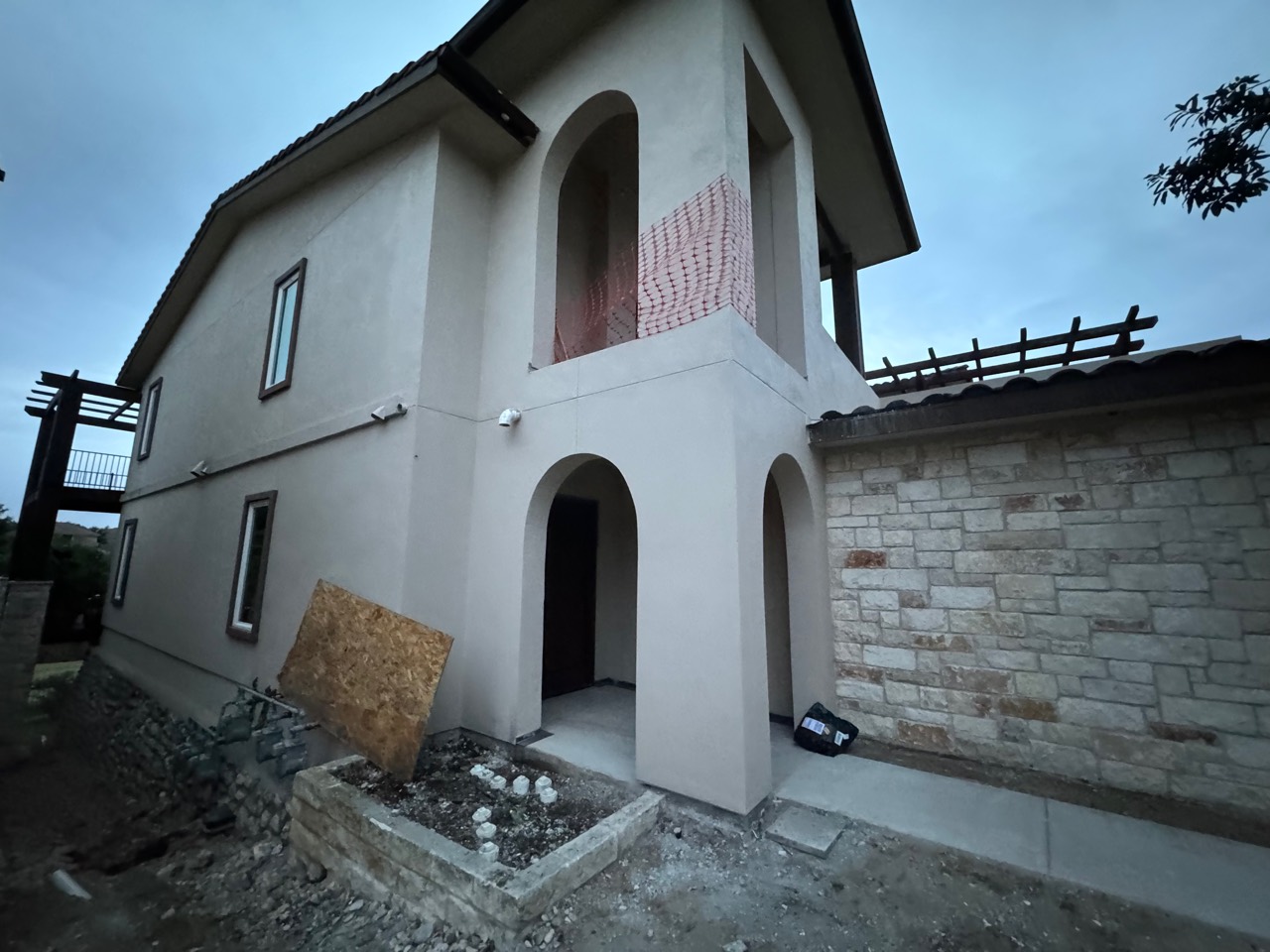
The outside finish hid damaged sheathing and prolonged moisture at the bottom of the assembly. These are photos from the same Texas Rock Solid repair.
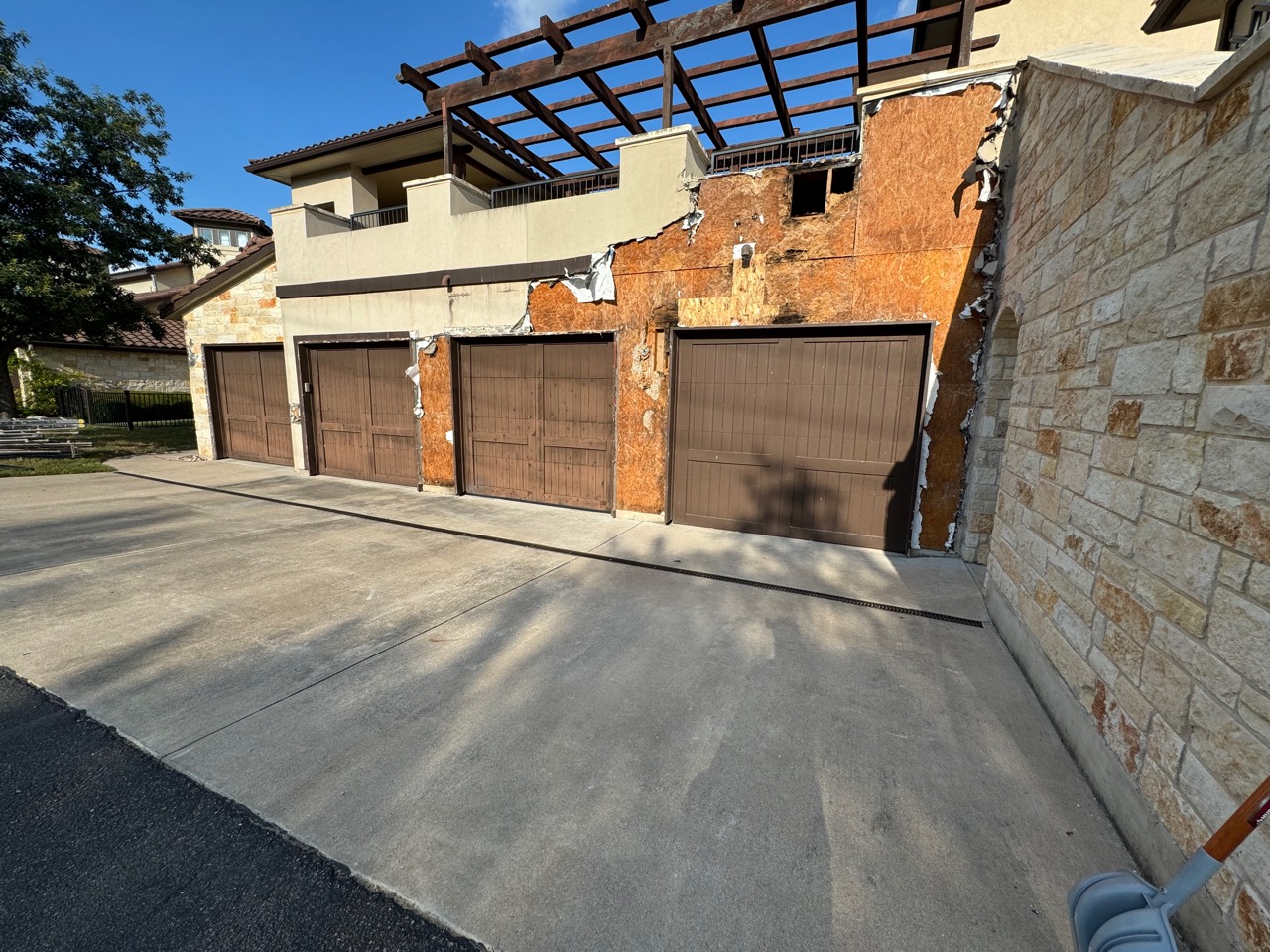
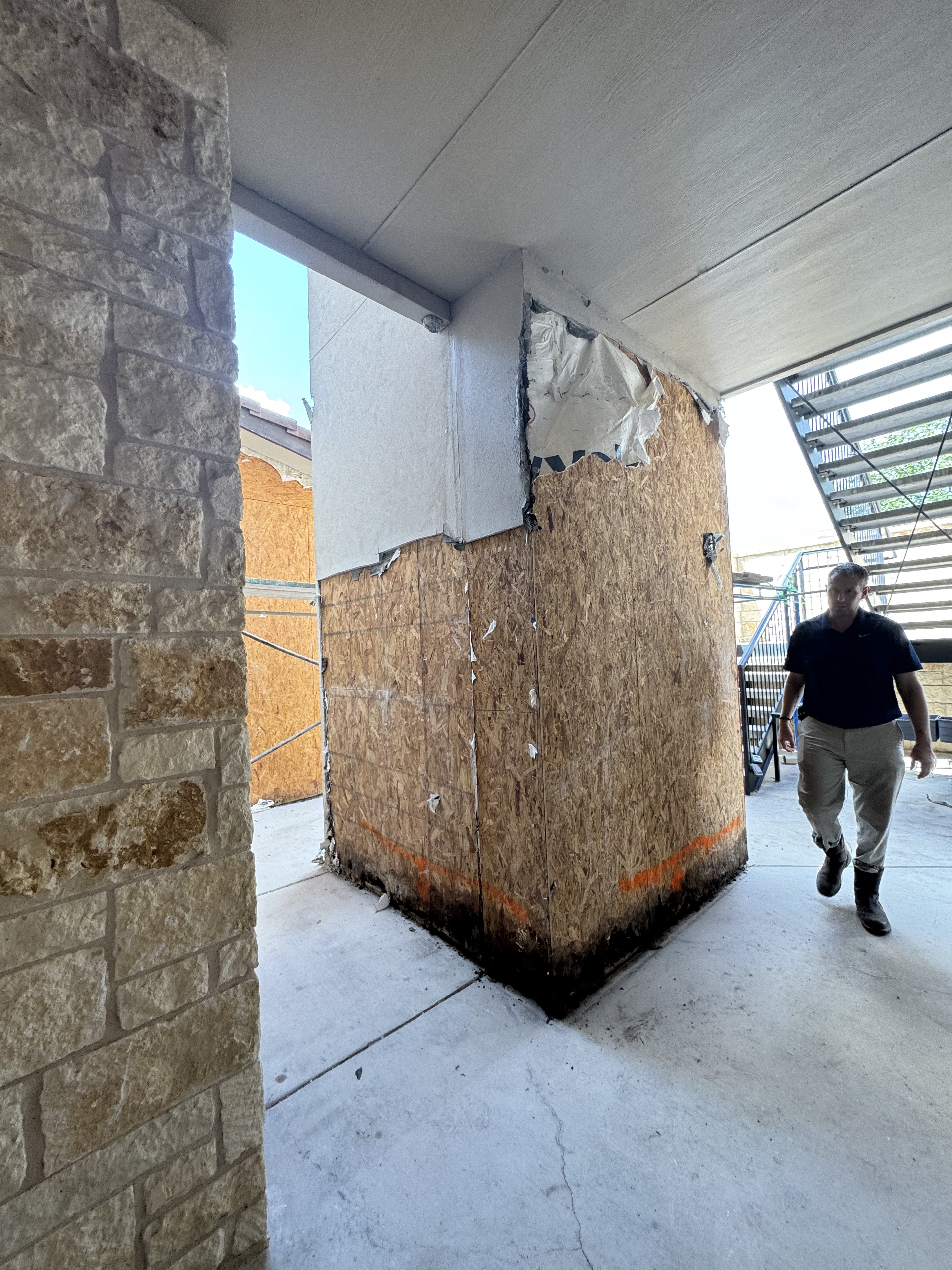
One real project, start to finish
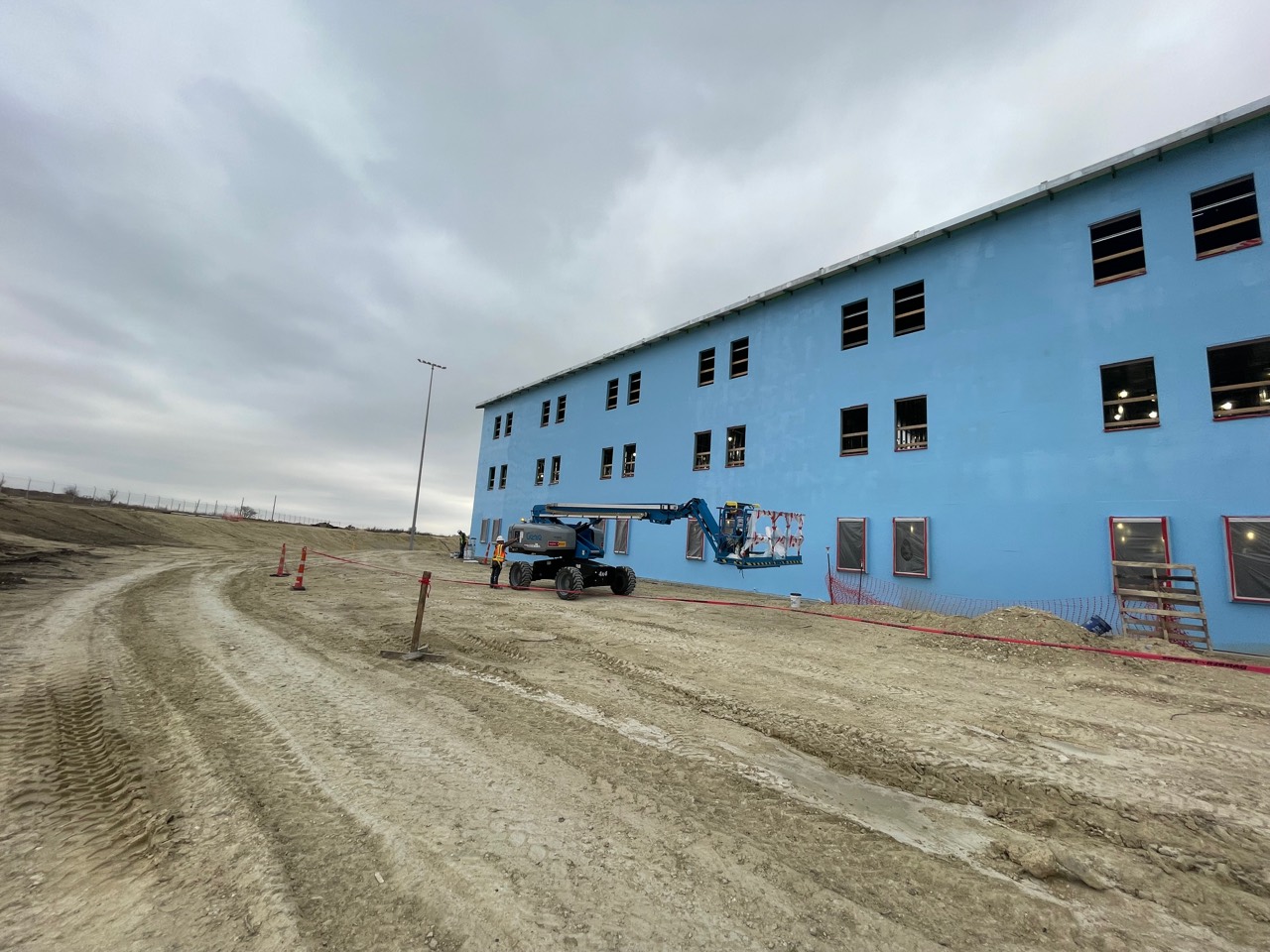
No stock photos. This is Texas Rock Solid waterproofing work on wood-framed residential construction and a large commercial-scale building.
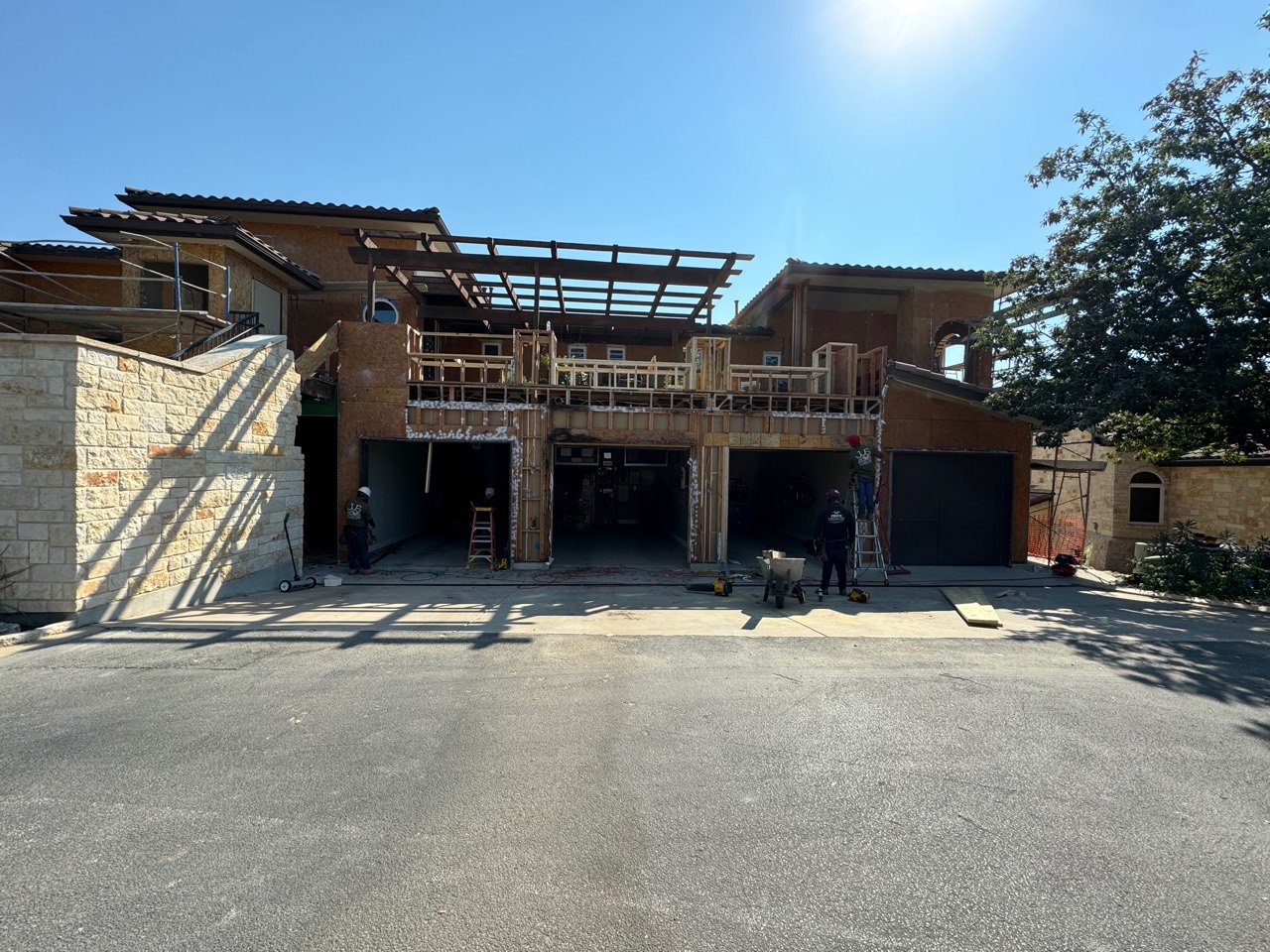
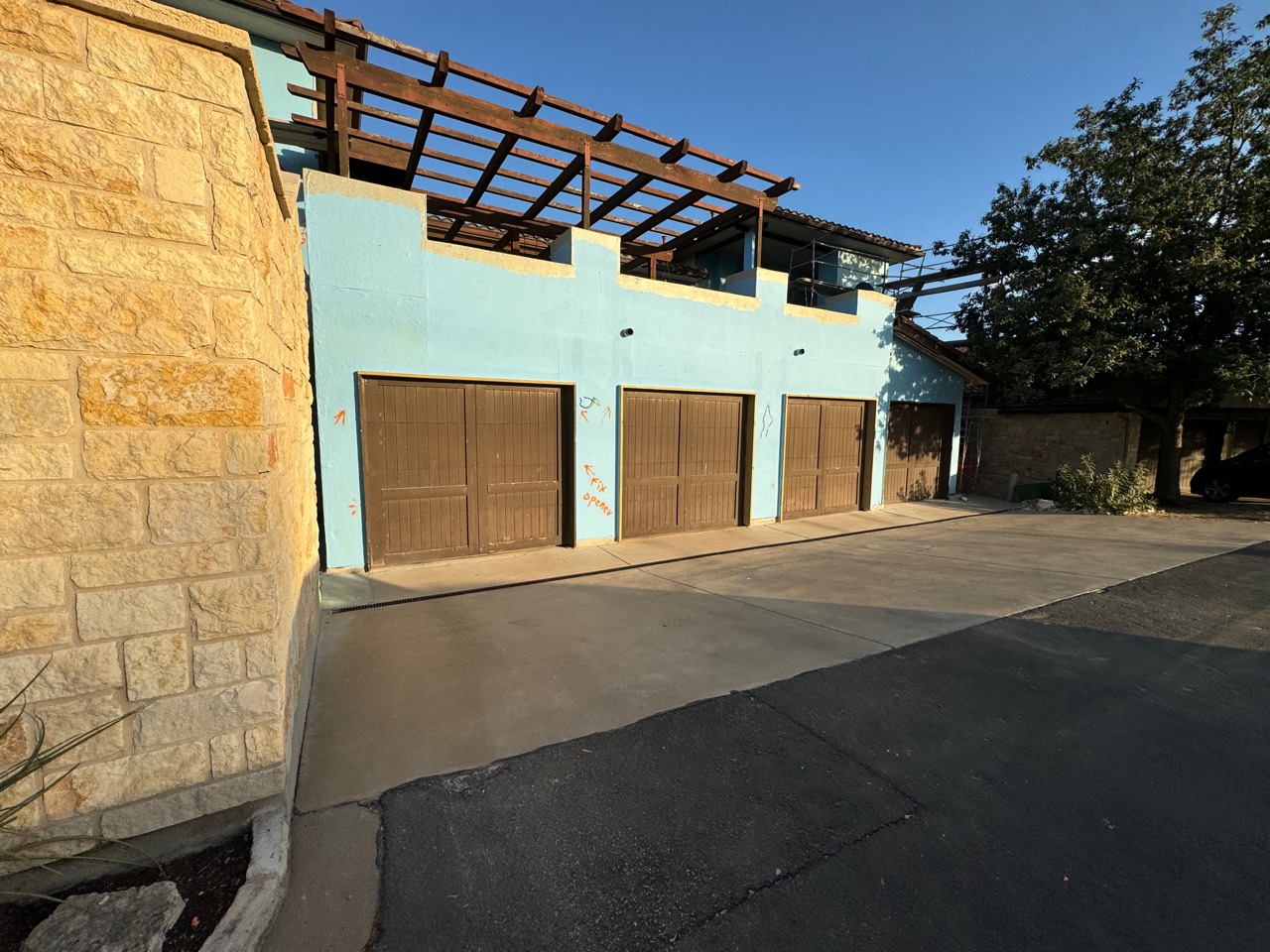
Where we work
Focused field work for the assemblies that keep Central Texas properties dry, stable, and finished.
Openings, transitions, decks, walls, and exterior finishes—opened only as far as the evidence requires.
Documented conditions, defined responsibility, and repair scopes a superintendent can act on.
Straight answers
We choose the test around the assembly. That may include moisture readings, controlled hose testing, visual inspection, and a small opening when the finish hides the wet path.
Yes. We inspect metal roof and wall systems, panel laps, fasteners, curbs, roof edges, windows, and penetrations on warehouses, retail buildings, offices, and similar commercial properties.
Yes. We inspect single-family homes, multifamily buildings, decks, exterior walls, window openings, roof transitions, and other places where water can enter the building envelope.
Request an Austin site visit
Share the address, when the condition appears, and a few useful photos. We’ll route it to the right field crew.
This request goes to Texas Rock Solid. Name the Austin waterproofing leak detection job. Do not mention other trades on this page.